
01 / THE BASICS
What is creatine?
Creatine is a naturally occurring compound your body makes from amino acids. You also get it from foods such as meat and fish. Most of your body’s creatine is stored in skeletal muscle, where it helps meet rapid energy demands. [2]
Creatine monohydrate is the most widely studied supplement form. It offers a practical way to increase muscle creatine stores beyond what a typical diet supplies. [1]
02 / THE SCIENCE
Energy for your next effort.
Your muscles use ATP as an immediate energy source. During a hard effort, ATP is rapidly used up. Phosphocreatine—a stored form of creatine—helps regenerate ATP so your muscles can keep producing energy during brief, intense activity. Supplementation increases the available creatine reserve. [2]
A heavy set. A short sprint. Another burst after a rest. These are the kinds of activities where creatine’s performance benefits are best established. [1]
03 / THE BENEFITS
Support for the work you put in.
Strength and power
Creatine can improve performance during repeated bouts of high-intensity exercise, including weightlifting and sprinting. The size of the benefit varies from person to person. [1]
Muscle gains alongside training
Combined with resistance training, creatine can support greater gains in lean mass and strength. Early increases in body weight can include water held within muscle; they should not all be interpreted as new muscle tissue. [2] [3]
Where expectations need perspective
Benefits are less consistent for steady endurance exercise. Creatine supports a training routine; it does not replace it. [1] Scientists also study creatine in brain health and aging, but findings in those areas should not be treated as a promise of cognitive improvement for every user. [2]
04 / YOUR ROUTINE
Keep it simple. Stay consistent.
Research commonly uses 3–5 g daily for maintenance. Loading is optional: lower daily doses can build muscle stores over roughly four weeks. Faster loading protocols exist, but larger doses can cause digestive discomfort. Follow your product’s label and seek individualized guidance when needed. [3]
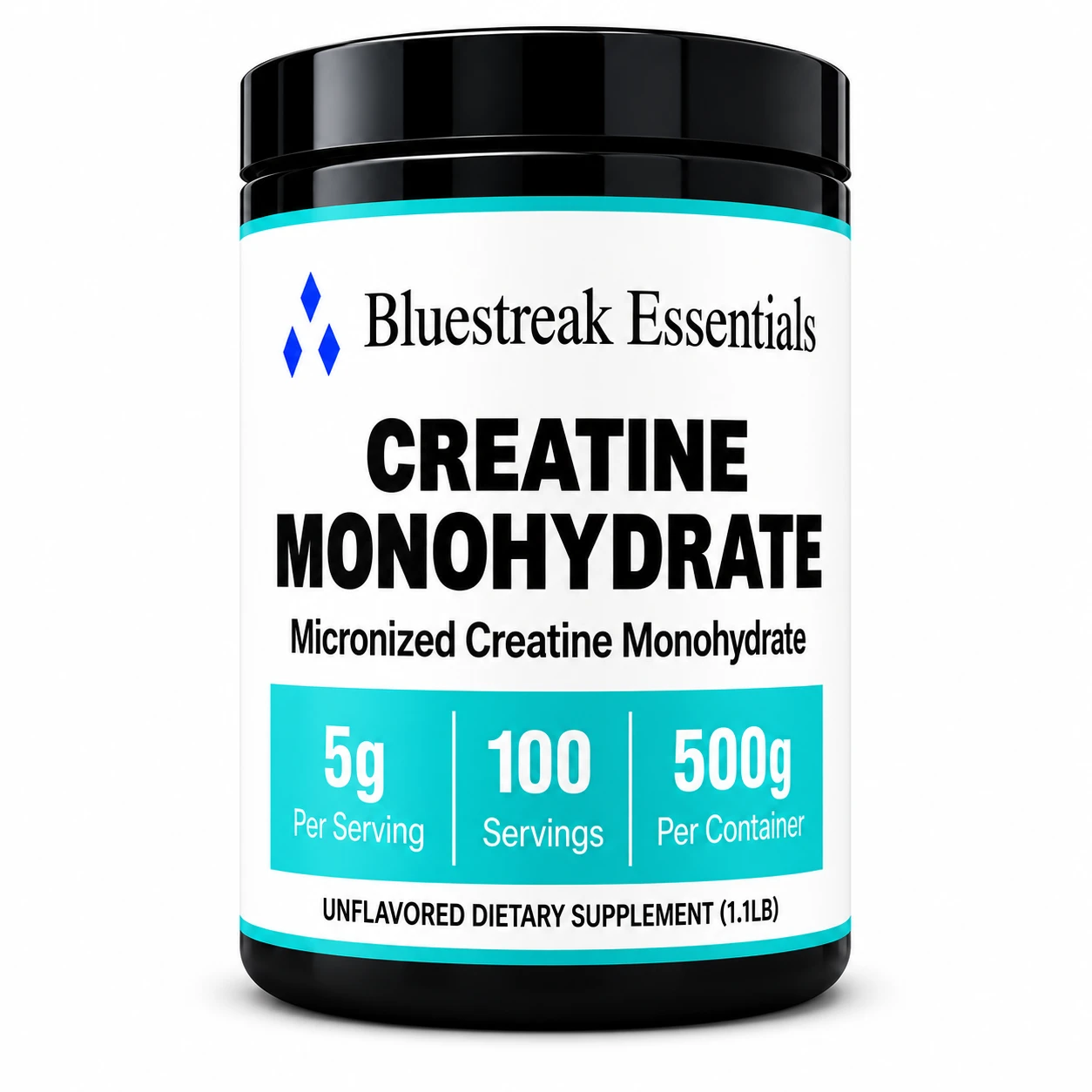
- Measure. A Bluestreak Essentials serving is one 5 g scoop.
- Mix. Stir into 6–8 oz of water or your preferred beverage, following the label.
- Repeat. Follow the daily maintenance directions. One 500 g jar provides 100 servings—100 days at one serving per day.
Choose a daily habit that is easy to remember, such as preparing your usual shake. Keep the jar closed and follow the storage directions on the container.
05 / A BRIEF HISTORY
Nearly two centuries of discovery.
French chemist Michel Eugène Chevreul identified creatine in meat extracts. Its name comes from the Greek word for meat, kreas. [4]
The discovery of phosphocreatine helped open the next chapter in understanding how muscles store and transfer energy. [4]
Sports supplementation research expanded. Decades of studies have made creatine monohydrate a well-established subject in exercise nutrition. [2]
06 / GOOD TO KNOW
A few important distinctions.
Micronized describes particle size.
It means the powder has been processed into smaller particles. It remains creatine monohydrate; the word alone does not establish superior muscle gains or absorption. [3]
Understand tolerance and safety.
Creatine is generally well tolerated by healthy adults at studied doses. Water-related weight gain and digestive upset can occur. [1] Research in healthy users has not shown kidney damage at recommended doses, but this does not establish suitability for someone with kidney disease. [3]
This product is for adults 18+. Consult a healthcare professional before use if pregnant or nursing, taking medication, or managing a medical condition. This guide is educational and does not replace personalized medical advice.
07 / YOUR BLUESTREAK SCOOP
One ingredient.
100 servings.
Unflavored micronized creatine monohydrate. 5 g per serving. 500 g for $24.99.
Shop on AmazonExplore the $19.99 first Subscribe & Save offer¹
View the full product labelResearch & references
The research below concerns creatine as an ingredient, not clinical testing of the Bluestreak Essentials finished product.
- NIH Office of Dietary Supplements: Exercise and Athletic Performance—Consumer Fact Sheet.
- Kreider et al. (2017). ISSN position stand: safety and efficacy of creatine supplementation.
- Antonio et al. (2021). Common questions and misconceptions about creatine supplementation.
- Creatine: historical overview and discovery chronology.